Visualizzazione post con etichetta AMC. Mostra tutti i post

8 dic 2012

HO VINTO UN CONTEST DI FOTOGRAFIA

Una mia foto vincitrice de AMERICAN CHESTNUT FOUNDATION PHOTO CONTEST


"The winning photo of this month's contest is G. Bonardi of Marradi, Italy who took this photo of local Italian chestnuts. Congratulations and happy roasting!"


15 set 2012

DOLLY PARTON AMA LE CASTAGNE

La più celebre  cantante folk country è un'appassionata di castagne e sta aiutando la American Chestnut Foundation nello sforzo di recuperare i castagneti americani praticamente scomparsi all'inizio del XX secolo.


Presto on-line un nuovo pezzo dedicato alle castagne, scritto in collaborazione con Bill Owen, dal titolo : "O chestnut tree" .

17 lug 2012

NEW YORK TIMES: CASTAGNE AMERICANE

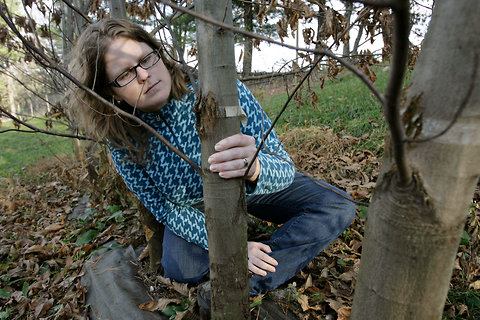
Con la firma di Deborah Weisberg, è uscito un interessante articolo sul NY Times riguardante la rinascita del Castagno Americano: "Coaxing American Chestnuts Back to Appalachian".

Sara Fitzsimmons, il coordinatore scientifico della American Chestnut Foundation, mentre osserva un cancro. 


25 giu 2012

SCOPERTO UN ALBERO DI CASTAGNO AMERICANO NEL MAINE

Nel Maine, fra i monti Appalachi, è stato scoperto dal sig. Perker Veitch un castagno americano: un'essenza oramai rarissima, dopo la distruzione avvenuta nel XIX secolo.
Si tratta di un albero solitario, circondato da querce e faggi, con circa 60 anni di vita, senza segni apparenti di cancro o altre cicatrici. Nessun altro castagno nel raggio di un kilometro.

Large American chestnut tree discovered by Parker Veitch in the Maine mountains. Great discovery!

45 inch circumference at chest height, no cankers or wounds visible, around 60 years old, well drained mountain side, shaded by a large eastern hemlock - majority of surrounding woods is oak and beech , seeds are not viable - hundreds of husks on the ground, grew from a seed (oppose to a stump sprout), and closest chestnut tree is roughly 1/2 a mile away.


18 giu 2012

INTERNATIONAL CHESTNUT SYMPOSIUM, SHEPHERDSTOWN, WV (USA)

Fifth International Chestnut Symposium


September 4-8, 2012

National Conservation Training Center
Shepherdstown, WV (USA)

The National Conservation Training Center (NCTC)  will be the site of the 2012 Fifth International Chestnut Symposium. This world-class conference facility is located in Shepherdstown, WV, about 60 miles (~100 km) west of Washington, DC at the foothills of the Appalachian Mountains and in the heart of the American chestnut range. NCTC is designed as a campus with lodging, meals and meeting rooms that are conveniently located within walking distance of each other and ideal for scientific exchange and social interaction at a reasonable cost. The meeting will begin with dinner on Tuesday evening, September 4 and finish on Saturday, September 8 with a noon luncheon.
Oral and poster presentations are planned as are field trips to local tree fruit sites and historical venues. Activities are planned for spouses including a day trip to Washington, DC.

Quinto Simposio internazionale sulla Castagna

4-8 settembre 2012

National Conservation Training Center

Shepherdstown, WV (USA)

Si terrà fra il 4 e l'8 settembre 2012 il quinto "Simposio sulla Castagna" a Shepherdstown, WV, circa 100 Km. da Washington, DC: la cittadina si trova ai piedi degli Appalachi, le montage che sono il cuore dell'areale delle castagne americane.

Per ulteriori informazioni clikka QUI


25 apr 2012

AMERICAN CHESTNUT SUMMIT

American Chestnut Summit


October 20-21, 2012

Crowne Plaza Tennis and Golf Resort
Asheville, NC

The 2012 American Chestnut Summit will bring together scientists, private landowners, conservationists, outdoor enthusiasts and industry professionals to share the current state of knowledge of the American chestnut and inspire reintroduction of this species to eastern forests. The Summit will provide a unique opportunity to enhance awareness of the importance of American chestnut restoration, explore partnerships, exchange information and discuss this exciting project with a wide audience.

American Chestnut Summit


20-21 Ottobre 2012

Crowne Plaza Tennis and Golf Resort
Asheville, NC, (USA)

L'iscrizione al summit chiuderà il 1° maggio 2012.
Per maggiori informazioni, clikka QUI


14 nov 2011

AMERICAN CHESTNUTS: AREALE DI PRODUZIONE DELLE CASTAGNE IN USA

Le castagne coprivano negli Stati Uniti più di 200 milioni di ettari nelle foreste dell'est, dal Maine fino alla Florida, e dal Piedmont plateau fino alla Ohio Valley.
Purtroppo a causa di funghi corticali apparsi all'inizio del 20esimo secolo questi maestosi alberi sono quasi scomparsi.
Si stima che circa un quarto delle foreste d'alto fusto fosse composto da castagni, per un totale di circa 4 miliardi di alberi.
Per saperne di più, clikka QUI.


The American chestnut tree reigned over 200 million acres of eastern woodlands from Maine to Florida, and from the Piedmont plateau in the Carolinas west to the Ohio Valley, until succumbing to a lethal fungus infestation, known as the chestnut blight, during the first half of the 20th century. An estimated 4 billion American chestnuts, up to 1/4 of the hardwood tree population, grew within this range.
To know more, click HERE

29 set 2011

AMERICAN CHESTNUTS FOUNDATION ANNUAL MEETING

The American Chestnut Foundation
28th Annual Meeting
October 21-23, 2011
Beaver Hollow Conference Center
Java Center, New York


Beaver Hollow Conference Center is nestled on 300 wooded acres with a private,
spring-fed lake.
It is located just 45 minutes from the Buffalo Niagara International Airport and showcases the beauty of New York in all of its autumn glory.
BEAVERHOLLOW.COM


Meeting Registration - $180 (does not include lodging)
Includes
· Friday Night Welcome Reception
· Saturday Night Dinner and Awards Program
· Access to all Workshops
· All Meals
Day Pass - Saturday ($65) or Sunday ($45)
Includes
· All Workshops
· Breakfast and Lunch
Day passes do NOT include Friday Night Welcome Reception or Saturday Night Dinner and Awards Program
Tickets can be purchased separately for the following events:
Friday Night Welcome Reception: $35
Saturday Night Dinner and Awards Program: $35
More info: HERE

22 set 2011

AMERICAN CHESTNUTS: VIDEO SULLA DISTRUZIONE DEL CASTAGNO AMERICANO

Un ulteriore video sull'apocalisse che ha colpito i castagni Americani fino alla loro distruzione.


The death of the american chestnut, one of the great trees of all time, by blight brought in from Asia. 4 billion trees, which had grown here for 40 million years, were lost in 40, causing ecological devastation and economic disaster to the Appalachians.

21 set 2011

AMERICAN CHESTNUTS: VIDEO SULLA DISTRUZIONE DEL CASTAGNO AMERICANO

Interessante video di Curtis Cornett sulla storia delle castagne americane e sull'impatto ecologico e sociale che la loro distruzione ebbe sulle zone montane degli Usa.
Un disastro che, dopo 100 anni, si sta ripetendo in Italia.


This is a must-see Videodocumentary by Dean and Nina Cornett on the history of the American Chestnut and the impact of its loss the twentieth century. This video does an excellent job of presenting the Appalachian oral history and traditions associated with the American chestnut.

Grazie alla American Chestnuts Foundation : clikka QUI

27 apr 2011

LOS ANGELES TIMES: NEW HOPE FOR THE OLD CHESTNUTS

Nuovo articolo del L.A. Times sulla situazione dei castagneti in Usa:
per l'articolo completo, clikka QUI


By Tina Susman, Los Angeles Times
From atop a small hill in Virginia, Fred Hebard has views into the past and the future. Ahead of him: the ancient peaks of southern Appalachia. American chestnut trees once held sway across those hazy hills, numbering some 4 billion across the eastern United States.

Behind Hebard: a fledgling forest of spindly chestnut trees, their young branches bare and quivering in the cold wind. If all goes well, those trees are the beginning of a new species, one created in a chestnut mating project aimed at salvaging the American chestnut tree from near extinction.

Hebard might never know if the plan succeeds. It could take decades to determine whether the trees behind him show high levels of blight resistance. "And that only tells you if you have a chance" at full resistance, said Hebard, chief scientist of the American Chestnut Foundation, who has devoted his life to crossbreeding nuts.

Before you snicker at the idea of a group called the American Chestnut Foundation, consider some chestnut facts: Americans spend $20 million a year importing chestnuts from Europe and Asia; the meaty nuts are gluten-free, cholesterol-free and a lot less fattening than other nuts; chestnuts make a terrific beer; chestnut tree devotees include Rolling Stones keyboardist Chuck Leavell, whose backyard in Georgia became home last month to a seedling that could be part of the new species coming from the farm Hebard oversees in southwestern Virginia.

"If we keep on losing components of our forests, what are we going to have left?" said Hebard, explaining the passion for a tree that is not even extinct, and for a nut that is imported easily from Europe and Asia for use in salads, stuffings, bread and in toasty bags sold from food carts in New York City.

America used to produce billions of those nuts until a blight imported from Asia attacked trees in New York. The disease spread quickly, and between 1904 and 1940, the trees were nearly wiped out.

Those that remained were either not blight-resistant or too few and widespread to produce healthy offspring to sustain the species, whose healthiest specimens grew to 100 feet tall. The trees' absence had a trickle-down effect on wildlife that foraged for chestnuts. Some experts say the panther's disappearance from this region can be traced to the trees' disappearance, because the rodents that were panther prey lost a key food source.

Follow Hebard might never know if the plan succeeds. It could take decades to determine whether the trees behind him show high levels of blight resistance. "And that only tells you if you have a chance" at full resistance, said Hebard, chief scientist of the American Chestnut Foundation, who has devoted his life to crossbreeding nuts.

Before you snicker at the idea of a group called the American Chestnut Foundation, consider some chestnut facts: Americans spend $20 million a year importing chestnuts from Europe and Asia; the meaty nuts are gluten-free, cholesterol-free and a lot less fattening than other nuts; chestnuts make a terrific beer; chestnut tree devotees include Rolling Stones keyboardist Chuck Leavell, whose backyard in Georgia became home last month to a seedling that could be part of the new species coming from the farm Hebard oversees in southwestern Virginia.

"If we keep on losing components of our forests, what are we going to have left?" said Hebard, explaining the passion for a tree that is not even extinct, and for a nut that is imported easily from Europe and Asia for use in salads, stuffings, bread and in toasty bags sold from food carts in New York City.

America used to produce billions of those nuts until a blight imported from Asia attacked trees in New York. The disease spread quickly, and between 1904 and 1940, the trees were nearly wiped out.

Those that remained were either not blight-resistant or too few and widespread to produce healthy offspring to sustain the species, whose healthiest specimens grew to 100 feet tall. The trees' absence had a trickle-down effect on wildlife that foraged for chestnuts. Some experts say the panther's disappearance from this region can be traced to the trees' disappearance, because the rodents that were panther prey lost a key food source.

It would be decades before the crossbreeding program would take hold. Now, after crossing blight-resistant Chinese chestnuts with nonresistant Americans, the foundation has begun widespread test plantings of a nut that is 15/16 American and 1/16 Chinese. It hopes the equation will produce a tree that has the Chinese version's resistance to disease and the American version's ability to thrive in North America's climate.

To follow at Los Angeles Times web pages

10 feb 2011

AMERICAN CHESTNUTS FOUNDATION

L'American Chestnut Foundation è stata fondata nel 1983 da un gruppo di studiosi di primo piano, che hanno riconosciuto il grave impatto che la scomparsa del castagno americano ha avuto per l'economia locale delle comunità rurali, e sulla ecologia delle foreste del paese.
Per saperne di più clikka QUI per acf.org e QUI per l'A.C.F. su twitter


The American Chestnut Foundation was founded in 1983 by a group of prominent plant scientists who recognized the severe impact the demise of the American chestnut tree imposed upon the local economy of rural communities, and upon the ecology of forests within the tree’s native range.


The American chestnut tree reigned over 200 million acres of eastern woodlands from Maine to Florida, and from the Piedmont west to the Ohio Valley, until succumbing to a lethal fungus infestation, known as the chestnut blight, during the first half of the 20th century. An estimated 4 billion American chestnuts, 1/4 of the hardwood tree population, grew within this range.


The American chestnut tree was an essential component of the entire eastern US ecosystem. A late-flowering, reliable, and productive tree, unaffected by seasonal frosts, it was the single most important food source for a wide variety of wildlife from bears to birds. Rural communities depended upon the annual nut harvest as a cash crop to feed livestock. The chestnut lumber industry was a major sector of rural economies. Chestnut wood is straight-grained and easily worked, lightweight and highly rot-resistant, making it ideal for fence posts, railroad ties, barn beams and home construction, as well as for fine furniture and musical instruments.

The blight, imported to the US on Asian chestnut trees, is a fungus dispersed via spores in the air, raindrops or animals. It is a wound pathogen, entering through a fresh injury in the tree's bark. It spreads into the bark and underlying vascular cambium and wood, killing these tissues as it advances. The flow of nutrients is eventually choked off to and from sections of the tree above the infection, killing them.

In 1989 TACF established the Wagner Research Farm, a breeding station in Meadowview, Virginia, to execute the backcross breeding program developed by Philip Rutter, Dr. David French and the late Dr. Charles Burnham, three of TACF’s founding scientists. The three of them wrote the first important paper about the breeding program (The citation is: Burnham, C.R., Rutter, P.A., and D.W. French. 1986. Breeding blight-resistant chestnuts. Plant Breeding Reviews 4:347-397). The goal was to breed blight resistance from the Chinese chestnut tree into the American chestnut tree, while maintaining the American chestnut’s characteristics.

TACF’s backcross breeding program took Chinese chestnut trees, naturally resistant to the blight, and crossed them with their American cousins, resulting in trees that were 50% American, 50% Chinese. These trees were then backcrossed to the American species, resulting in trees which were 75% American. The procedure was repeated to produce an American chestnut tree that retains no Chinese characteristics other than blight resistance. A second research farm in Meadowview was donated to TACF in 1995 by Mary Belle Price, in memory of her late husband Glenn C. Price, a strong supporter of TACF. A third Meadowview farm was purchased in 2002, and a fourth in 2006. Today, TACF’s Meadowview Research Farms have over 30,000 trees at various stages of breeding, planted on more than 160 acres of land.

Two independent reviews of TACF’s scientific mission, methods, and results, were conducted in 1999 and in 2006 by prominent scientists from around the world. They concluded that the vision of The American Chestnut Foundation to restore the American chestnut to its native habitat in the United States is being accomplished through the breeding program & other TACF activities, and that regional adaptability is key to a successful reintroduction of the American chestnut tree. The reviews were chaired by Dr. Ronald L. Phillips, Regents' Professor of Plant Genetics at the University of Minnesota and a member of the National Academy of Sciences.

Click HERE to link to acf.org

Click HERE to ACF on twitter