
Visualizzazione post con etichetta chestnuts. Mostra tutti i post
Visualizzazione post con etichetta chestnuts. Mostra tutti i post
15 set 2012
DOLLY PARTON AMA LE CASTAGNE
La più celebre cantante folk country è un'appassionata di castagne e sta aiutando la American Chestnut Foundation nello sforzo di recuperare i castagneti americani praticamente scomparsi all'inizio del XX secolo.
Presto on-line un nuovo pezzo dedicato alle castagne, scritto in collaborazione con Bill Owen, dal titolo : "O chestnut tree" .
Presto on-line un nuovo pezzo dedicato alle castagne, scritto in collaborazione con Bill Owen, dal titolo : "O chestnut tree" .


17 lug 2012
NEW YORK TIMES: CASTAGNE AMERICANE
Con la firma di Deborah Weisberg, è uscito un interessante articolo sul NY Times riguardante la rinascita del Castagno Americano: "Coaxing American Chestnuts Back to Appalachian".
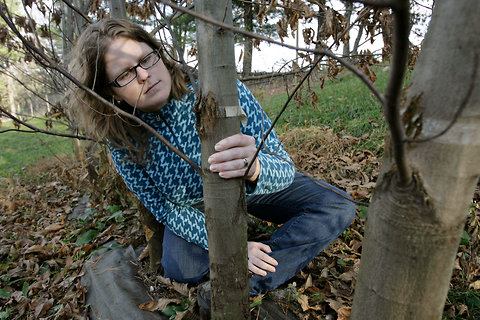 |
| Sara Fitzsimmons, il coordinatore scientifico della American Chestnut Foundation, mentre osserva un cancro. |
18 giu 2012
INTERNATIONAL CHESTNUT SYMPOSIUM, SHEPHERDSTOWN, WV (USA)
Fifth International Chestnut Symposium
September 4-8, 2012
National Conservation Training Center
Shepherdstown, WV (USA)
The National Conservation Training Center (NCTC) will be the site of the 2012 Fifth International Chestnut Symposium. This world-class conference facility is located in Shepherdstown, WV, about 60 miles (~100 km) west of Washington, DC at the foothills of the Appalachian Mountains and in the heart of the American chestnut range. NCTC is designed as a campus with lodging, meals and meeting rooms that are conveniently located within walking distance of each other and ideal for scientific exchange and social interaction at a reasonable cost. The meeting will begin with dinner on Tuesday evening, September 4 and finish on Saturday, September 8 with a noon luncheon.
Oral and poster presentations are planned as are field trips to local tree fruit sites and historical venues. Activities are planned for spouses including a day trip to Washington, DC.
Quinto Simposio internazionale sulla Castagna
4-8 settembre 2012
National Conservation Training Center
Shepherdstown, WV (USA)
Si terrà fra il 4 e l'8 settembre 2012 il quinto "Simposio sulla Castagna" a Shepherdstown, WV, circa 100 Km. da Washington, DC: la cittadina si trova ai piedi degli Appalachi, le montage che sono il cuore dell'areale delle castagne americane.
Per ulteriori informazioni clikka QUI
September 4-8, 2012
National Conservation Training Center
Shepherdstown, WV (USA)
The National Conservation Training Center (NCTC) will be the site of the 2012 Fifth International Chestnut Symposium. This world-class conference facility is located in Shepherdstown, WV, about 60 miles (~100 km) west of Washington, DC at the foothills of the Appalachian Mountains and in the heart of the American chestnut range. NCTC is designed as a campus with lodging, meals and meeting rooms that are conveniently located within walking distance of each other and ideal for scientific exchange and social interaction at a reasonable cost. The meeting will begin with dinner on Tuesday evening, September 4 and finish on Saturday, September 8 with a noon luncheon.
Oral and poster presentations are planned as are field trips to local tree fruit sites and historical venues. Activities are planned for spouses including a day trip to Washington, DC.
Quinto Simposio internazionale sulla Castagna
4-8 settembre 2012
National Conservation Training Center
Shepherdstown, WV (USA)
Si terrà fra il 4 e l'8 settembre 2012 il quinto "Simposio sulla Castagna" a Shepherdstown, WV, circa 100 Km. da Washington, DC: la cittadina si trova ai piedi degli Appalachi, le montage che sono il cuore dell'areale delle castagne americane.
Per ulteriori informazioni clikka QUI
25 apr 2012
AMERICAN CHESTNUT SUMMIT
American Chestnut Summit
October 20-21, 2012
Crowne Plaza Tennis and Golf Resort
Asheville, NC
The 2012 American Chestnut Summit will bring together scientists, private landowners, conservationists, outdoor enthusiasts and industry professionals to share the current state of knowledge of the American chestnut and inspire reintroduction of this species to eastern forests. The Summit will provide a unique opportunity to enhance awareness of the importance of American chestnut restoration, explore partnerships, exchange information and discuss this exciting project with a wide audience.
American Chestnut Summit
20-21 Ottobre 2012
Crowne Plaza Tennis and Golf Resort
Asheville, NC, (USA)
L'iscrizione al summit chiuderà il 1° maggio 2012.
Per maggiori informazioni, clikka QUI
October 20-21, 2012
Crowne Plaza Tennis and Golf Resort
Asheville, NC
The 2012 American Chestnut Summit will bring together scientists, private landowners, conservationists, outdoor enthusiasts and industry professionals to share the current state of knowledge of the American chestnut and inspire reintroduction of this species to eastern forests. The Summit will provide a unique opportunity to enhance awareness of the importance of American chestnut restoration, explore partnerships, exchange information and discuss this exciting project with a wide audience.
American Chestnut Summit
20-21 Ottobre 2012
Crowne Plaza Tennis and Golf Resort
Asheville, NC, (USA)
L'iscrizione al summit chiuderà il 1° maggio 2012.
Per maggiori informazioni, clikka QUI
23 apr 2012
CHESTNUT GROUP: LA PITTURA PER AIUTARE IL TERRITORIO
The CHESTNUT GROUP è un associazione non-profit di artisti paesaggisti che si dedicano alla conservazione dei paesaggi che stanno scomparendo nel Tennessee centrale.
Una parte dei ricavi ottenuti dalla vendita delle loro opere, ispirate dalla bellezza di questa regione, servono ad aiutare a preservare il fragile ambiente della regione stessa.
Quindi non direttamente collegati con le castagne...ma troppo simpatici per non citarli !!
Per maggiori informazioni, clikka QUI

The CHESTNUT GROUP is a nonprofit alliance of landscape artists and friends dedicated to the conservation & preservation of vanishing landscapes in Middle Tennessee. A portion of funds earned from the sale of artwork, inspired by the region’s scenic richness, is made available to organizations that share a common vision: To preserve fragile local environments and historic properties – from threatened habitats and farmland to protected natural areas.
For more info, just clik HERE

Una parte dei ricavi ottenuti dalla vendita delle loro opere, ispirate dalla bellezza di questa regione, servono ad aiutare a preservare il fragile ambiente della regione stessa.
Quindi non direttamente collegati con le castagne...ma troppo simpatici per non citarli !!
Per maggiori informazioni, clikka QUI

The CHESTNUT GROUP is a nonprofit alliance of landscape artists and friends dedicated to the conservation & preservation of vanishing landscapes in Middle Tennessee. A portion of funds earned from the sale of artwork, inspired by the region’s scenic richness, is made available to organizations that share a common vision: To preserve fragile local environments and historic properties – from threatened habitats and farmland to protected natural areas.
For more info, just clik HERE

27 mar 2012
SCIENCEDAILY: REINTRODUCING THE AMERICAN CHESTNUT TREE

Bell'articolo della rivista SCIENCEDAILY sulla re-introduzione del castagno americano negli Usa.
Clikka qui: Reintroducing the American chestnut tree
21 feb 2012


14 nov 2011
AMERICAN CHESTNUTS: AREALE DI PRODUZIONE DELLE CASTAGNE IN USA
Le castagne coprivano negli Stati Uniti più di 200 milioni di ettari nelle foreste dell'est, dal Maine fino alla Florida, e dal Piedmont plateau fino alla Ohio Valley.
Purtroppo a causa di funghi corticali apparsi all'inizio del 20esimo secolo questi maestosi alberi sono quasi scomparsi.
Si stima che circa un quarto delle foreste d'alto fusto fosse composto da castagni, per un totale di circa 4 miliardi di alberi.
Per saperne di più, clikka QUI.

The American chestnut tree reigned over 200 million acres of eastern woodlands from Maine to Florida, and from the Piedmont plateau in the Carolinas west to the Ohio Valley, until succumbing to a lethal fungus infestation, known as the chestnut blight, during the first half of the 20th century. An estimated 4 billion American chestnuts, up to 1/4 of the hardwood tree population, grew within this range.
To know more, click HERE
Purtroppo a causa di funghi corticali apparsi all'inizio del 20esimo secolo questi maestosi alberi sono quasi scomparsi.
Si stima che circa un quarto delle foreste d'alto fusto fosse composto da castagni, per un totale di circa 4 miliardi di alberi.
Per saperne di più, clikka QUI.

The American chestnut tree reigned over 200 million acres of eastern woodlands from Maine to Florida, and from the Piedmont plateau in the Carolinas west to the Ohio Valley, until succumbing to a lethal fungus infestation, known as the chestnut blight, during the first half of the 20th century. An estimated 4 billion American chestnuts, up to 1/4 of the hardwood tree population, grew within this range.
To know more, click HERE
3 nov 2011
A FUNNY VIDEO ABOUT CHESTNUTS IN ITALY
A funny video about chestnuts in Castel del Rio (BO) near Marradi
29 set 2011
AMERICAN CHESTNUTS FOUNDATION ANNUAL MEETING
The American Chestnut Foundation
28th Annual Meeting
October 21-23, 2011
Beaver Hollow Conference Center
Java Center, New York

Beaver Hollow Conference Center is nestled on 300 wooded acres with a private,
spring-fed lake.
It is located just 45 minutes from the Buffalo Niagara International Airport and showcases the beauty of New York in all of its autumn glory.
BEAVERHOLLOW.COM
Meeting Registration - $180 (does not include lodging)
Includes
· Friday Night Welcome Reception
· Saturday Night Dinner and Awards Program
· Access to all Workshops
· All Meals
Day Pass - Saturday ($65) or Sunday ($45)
Includes
· All Workshops
· Breakfast and Lunch
Day passes do NOT include Friday Night Welcome Reception or Saturday Night Dinner and Awards Program
Tickets can be purchased separately for the following events:
Friday Night Welcome Reception: $35
Saturday Night Dinner and Awards Program: $35
More info: HERE
28th Annual Meeting
October 21-23, 2011
Beaver Hollow Conference Center
Java Center, New York
Beaver Hollow Conference Center is nestled on 300 wooded acres with a private,
spring-fed lake.
It is located just 45 minutes from the Buffalo Niagara International Airport and showcases the beauty of New York in all of its autumn glory.
BEAVERHOLLOW.COM
Meeting Registration - $180 (does not include lodging)
Includes
· Friday Night Welcome Reception
· Saturday Night Dinner and Awards Program
· Access to all Workshops
· All Meals
Day Pass - Saturday ($65) or Sunday ($45)
Includes
· All Workshops
· Breakfast and Lunch
Day passes do NOT include Friday Night Welcome Reception or Saturday Night Dinner and Awards Program
Tickets can be purchased separately for the following events:
Friday Night Welcome Reception: $35
Saturday Night Dinner and Awards Program: $35
More info: HERE
22 set 2011
AMERICAN CHESTNUTS: VIDEO SULLA DISTRUZIONE DEL CASTAGNO AMERICANO
Un ulteriore video sull'apocalisse che ha colpito i castagni Americani fino alla loro distruzione.
The death of the american chestnut, one of the great trees of all time, by blight brought in from Asia. 4 billion trees, which had grown here for 40 million years, were lost in 40, causing ecological devastation and economic disaster to the Appalachians.
The death of the american chestnut, one of the great trees of all time, by blight brought in from Asia. 4 billion trees, which had grown here for 40 million years, were lost in 40, causing ecological devastation and economic disaster to the Appalachians.
21 set 2011
AMERICAN CHESTNUTS: VIDEO SULLA DISTRUZIONE DEL CASTAGNO AMERICANO
Interessante video di Curtis Cornett sulla storia delle castagne americane e sull'impatto ecologico e sociale che la loro distruzione ebbe sulle zone montane degli Usa.
Un disastro che, dopo 100 anni, si sta ripetendo in Italia.
This is a must-see Videodocumentary by Dean and Nina Cornett on the history of the American Chestnut and the impact of its loss the twentieth century. This video does an excellent job of presenting the Appalachian oral history and traditions associated with the American chestnut.
Grazie alla American Chestnuts Foundation : clikka QUI
Un disastro che, dopo 100 anni, si sta ripetendo in Italia.
This is a must-see Videodocumentary by Dean and Nina Cornett on the history of the American Chestnut and the impact of its loss the twentieth century. This video does an excellent job of presenting the Appalachian oral history and traditions associated with the American chestnut.
Grazie alla American Chestnuts Foundation : clikka QUI
27 apr 2011
LOS ANGELES TIMES: NEW HOPE FOR THE OLD CHESTNUTS
Nuovo articolo del L.A. Times sulla situazione dei castagneti in Usa:
per l'articolo completo, clikka QUI

By Tina Susman, Los Angeles Times
From atop a small hill in Virginia, Fred Hebard has views into the past and the future. Ahead of him: the ancient peaks of southern Appalachia. American chestnut trees once held sway across those hazy hills, numbering some 4 billion across the eastern United States.
Behind Hebard: a fledgling forest of spindly chestnut trees, their young branches bare and quivering in the cold wind. If all goes well, those trees are the beginning of a new species, one created in a chestnut mating project aimed at salvaging the American chestnut tree from near extinction.
Hebard might never know if the plan succeeds. It could take decades to determine whether the trees behind him show high levels of blight resistance. "And that only tells you if you have a chance" at full resistance, said Hebard, chief scientist of the American Chestnut Foundation, who has devoted his life to crossbreeding nuts.
Before you snicker at the idea of a group called the American Chestnut Foundation, consider some chestnut facts: Americans spend $20 million a year importing chestnuts from Europe and Asia; the meaty nuts are gluten-free, cholesterol-free and a lot less fattening than other nuts; chestnuts make a terrific beer; chestnut tree devotees include Rolling Stones keyboardist Chuck Leavell, whose backyard in Georgia became home last month to a seedling that could be part of the new species coming from the farm Hebard oversees in southwestern Virginia.
"If we keep on losing components of our forests, what are we going to have left?" said Hebard, explaining the passion for a tree that is not even extinct, and for a nut that is imported easily from Europe and Asia for use in salads, stuffings, bread and in toasty bags sold from food carts in New York City.
America used to produce billions of those nuts until a blight imported from Asia attacked trees in New York. The disease spread quickly, and between 1904 and 1940, the trees were nearly wiped out.
Those that remained were either not blight-resistant or too few and widespread to produce healthy offspring to sustain the species, whose healthiest specimens grew to 100 feet tall. The trees' absence had a trickle-down effect on wildlife that foraged for chestnuts. Some experts say the panther's disappearance from this region can be traced to the trees' disappearance, because the rodents that were panther prey lost a key food source.
Follow Hebard might never know if the plan succeeds. It could take decades to determine whether the trees behind him show high levels of blight resistance. "And that only tells you if you have a chance" at full resistance, said Hebard, chief scientist of the American Chestnut Foundation, who has devoted his life to crossbreeding nuts.
Before you snicker at the idea of a group called the American Chestnut Foundation, consider some chestnut facts: Americans spend $20 million a year importing chestnuts from Europe and Asia; the meaty nuts are gluten-free, cholesterol-free and a lot less fattening than other nuts; chestnuts make a terrific beer; chestnut tree devotees include Rolling Stones keyboardist Chuck Leavell, whose backyard in Georgia became home last month to a seedling that could be part of the new species coming from the farm Hebard oversees in southwestern Virginia.
"If we keep on losing components of our forests, what are we going to have left?" said Hebard, explaining the passion for a tree that is not even extinct, and for a nut that is imported easily from Europe and Asia for use in salads, stuffings, bread and in toasty bags sold from food carts in New York City.
America used to produce billions of those nuts until a blight imported from Asia attacked trees in New York. The disease spread quickly, and between 1904 and 1940, the trees were nearly wiped out.
Those that remained were either not blight-resistant or too few and widespread to produce healthy offspring to sustain the species, whose healthiest specimens grew to 100 feet tall. The trees' absence had a trickle-down effect on wildlife that foraged for chestnuts. Some experts say the panther's disappearance from this region can be traced to the trees' disappearance, because the rodents that were panther prey lost a key food source.
It would be decades before the crossbreeding program would take hold. Now, after crossing blight-resistant Chinese chestnuts with nonresistant Americans, the foundation has begun widespread test plantings of a nut that is 15/16 American and 1/16 Chinese. It hopes the equation will produce a tree that has the Chinese version's resistance to disease and the American version's ability to thrive in North America's climate.
To follow at Los Angeles Times web pages
per l'articolo completo, clikka QUI

By Tina Susman, Los Angeles Times
From atop a small hill in Virginia, Fred Hebard has views into the past and the future. Ahead of him: the ancient peaks of southern Appalachia. American chestnut trees once held sway across those hazy hills, numbering some 4 billion across the eastern United States.
Behind Hebard: a fledgling forest of spindly chestnut trees, their young branches bare and quivering in the cold wind. If all goes well, those trees are the beginning of a new species, one created in a chestnut mating project aimed at salvaging the American chestnut tree from near extinction.
Hebard might never know if the plan succeeds. It could take decades to determine whether the trees behind him show high levels of blight resistance. "And that only tells you if you have a chance" at full resistance, said Hebard, chief scientist of the American Chestnut Foundation, who has devoted his life to crossbreeding nuts.
Before you snicker at the idea of a group called the American Chestnut Foundation, consider some chestnut facts: Americans spend $20 million a year importing chestnuts from Europe and Asia; the meaty nuts are gluten-free, cholesterol-free and a lot less fattening than other nuts; chestnuts make a terrific beer; chestnut tree devotees include Rolling Stones keyboardist Chuck Leavell, whose backyard in Georgia became home last month to a seedling that could be part of the new species coming from the farm Hebard oversees in southwestern Virginia.
"If we keep on losing components of our forests, what are we going to have left?" said Hebard, explaining the passion for a tree that is not even extinct, and for a nut that is imported easily from Europe and Asia for use in salads, stuffings, bread and in toasty bags sold from food carts in New York City.
America used to produce billions of those nuts until a blight imported from Asia attacked trees in New York. The disease spread quickly, and between 1904 and 1940, the trees were nearly wiped out.
Those that remained were either not blight-resistant or too few and widespread to produce healthy offspring to sustain the species, whose healthiest specimens grew to 100 feet tall. The trees' absence had a trickle-down effect on wildlife that foraged for chestnuts. Some experts say the panther's disappearance from this region can be traced to the trees' disappearance, because the rodents that were panther prey lost a key food source.
Follow Hebard might never know if the plan succeeds. It could take decades to determine whether the trees behind him show high levels of blight resistance. "And that only tells you if you have a chance" at full resistance, said Hebard, chief scientist of the American Chestnut Foundation, who has devoted his life to crossbreeding nuts.
Before you snicker at the idea of a group called the American Chestnut Foundation, consider some chestnut facts: Americans spend $20 million a year importing chestnuts from Europe and Asia; the meaty nuts are gluten-free, cholesterol-free and a lot less fattening than other nuts; chestnuts make a terrific beer; chestnut tree devotees include Rolling Stones keyboardist Chuck Leavell, whose backyard in Georgia became home last month to a seedling that could be part of the new species coming from the farm Hebard oversees in southwestern Virginia.
"If we keep on losing components of our forests, what are we going to have left?" said Hebard, explaining the passion for a tree that is not even extinct, and for a nut that is imported easily from Europe and Asia for use in salads, stuffings, bread and in toasty bags sold from food carts in New York City.
America used to produce billions of those nuts until a blight imported from Asia attacked trees in New York. The disease spread quickly, and between 1904 and 1940, the trees were nearly wiped out.
Those that remained were either not blight-resistant or too few and widespread to produce healthy offspring to sustain the species, whose healthiest specimens grew to 100 feet tall. The trees' absence had a trickle-down effect on wildlife that foraged for chestnuts. Some experts say the panther's disappearance from this region can be traced to the trees' disappearance, because the rodents that were panther prey lost a key food source.
It would be decades before the crossbreeding program would take hold. Now, after crossing blight-resistant Chinese chestnuts with nonresistant Americans, the foundation has begun widespread test plantings of a nut that is 15/16 American and 1/16 Chinese. It hopes the equation will produce a tree that has the Chinese version's resistance to disease and the American version's ability to thrive in North America's climate.
To follow at Los Angeles Times web pages
12 apr 2011
PASSION CHESTNUTS
I found an easy recipe dating from nineteenth century, called: passion chestnuts .
It seems to have aphrodisiac properties.

Recipe
Put the already peeled chestnuts to soak in Muscat-wine for a few hours.
Boil them in the same soaking liquid, in a pot covered with a lid, until cooked (around 20').
Before serving, garnish with a few pistachios, cinnamon and honey.
I do not take responsibility if they do not work in the field of love; although chestnuts are heart-shaped ...

For more chestnuts recipes, click HERE
It seems to have aphrodisiac properties.

Recipe
Put the already peeled chestnuts to soak in Muscat-wine for a few hours.
Boil them in the same soaking liquid, in a pot covered with a lid, until cooked (around 20').
Before serving, garnish with a few pistachios, cinnamon and honey.
I do not take responsibility if they do not work in the field of love; although chestnuts are heart-shaped ...

For more chestnuts recipes, click HERE
1 mar 2011
WASHINGTON POST: BRING BACK AMERICAN CHESTNUTS TREES
Nello stato di Washington alcune migliaia di volontari stanno cercando di riportare in vita gli antichi castagneti americani, quasi completamente cancellati nel secolo scorso dal cancro.
Video by Washingtonpost.com
In the Washington area and along the Appalachian trail, a few thousand volunteers are on an improbable quest: to bring back the American chestnut tree, which was wiped out more than a half-century ago. (Dylan Klempner)

Video by Washingtonpost.com
In the Washington area and along the Appalachian trail, a few thousand volunteers are on an improbable quest: to bring back the American chestnut tree, which was wiped out more than a half-century ago. (Dylan Klempner)

15 feb 2011
FILM: LAST CHESTNUTS di Zhao Ye

Questo film presentato dal regista cinese Zhao Ye, autore fra l'altro di "Jalainur", al Nara film festival QUI ed al Torino film festival è un progetto giapponese targato Naomi Kawase.
In un paesaggio autunnale, una donna si reca in visita in un villaggio della prefettura di Nara, lontano da casa, alla ricerca del figlio che da qualche tempo non si fa più vivo. Gli unici indizi a sua disposizione sono le fotografie presenti nella fotocamera digitale che il giovane ha dimenticato quando le ha fatto visita l’ultima volta.
Con l’aiuto di molte persone, tra cui un anziano attore amante dei gatti e la madre di un’amica del figlio, la donna si avvicina a poco a poco a dare un senso alla presenza del figlio in quel villaggio, alla sua vita così diversa dalle visite che regolarmente le fa, ed al suo desiderio di riportare a casa la madre malata intraprendendo un viaggio senza ritorno per regalarle un cesto pieno di castagne.
Il mistero della scomparsa del ragazzo - e anche della disperata ricerca intrapresa dalla madre - si fa gradualmente sempre più chiaro, conducendo a un finale amaro e struggente.
Interpretazioni da applauso e un finale che è una stretta al cuore.

日本 / 2010年 / DVcam / 60分 / 英語字幕 / NPO法人なら国際映画祭実行委員会 配
光男の栗
〈監督〉趙曄
〈脚本〉趙曄
〈プロデューサー〉河瀬直美
ある日、東京の病院に入院生活をしているはずの母は奈良県橿原市に降り立つ。東京から橿原に来た理由は息子探し。息子が母の元に置いていったデジタルカメラに収められた写真を頼りに、母親の息子探しが展開する。息子の足跡を一つ一つ歩き続けたその先にあったものは、親切な息子の友人、壮大な奈良の自然、そして深い息子の母への想いだった。末期癌をわずらう母とその母を想う息子のすれ違いと結びつき。ある母息子の愛のかたちを橿原から世界に届けます。
10 feb 2011
AMERICAN CHESTNUTS FOUNDATION
L'American Chestnut Foundation è stata fondata nel 1983 da un gruppo di studiosi di primo piano, che hanno riconosciuto il grave impatto che la scomparsa del castagno americano ha avuto per l'economia locale delle comunità rurali, e sulla ecologia delle foreste del paese.
Per saperne di più clikka QUI per acf.org e QUI per l'A.C.F. su twitter

The American Chestnut Foundation was founded in 1983 by a group of prominent plant scientists who recognized the severe impact the demise of the American chestnut tree imposed upon the local economy of rural communities, and upon the ecology of forests within the tree’s native range.
The American chestnut tree reigned over 200 million acres of eastern woodlands from Maine to Florida, and from the Piedmont west to the Ohio Valley, until succumbing to a lethal fungus infestation, known as the chestnut blight, during the first half of the 20th century. An estimated 4 billion American chestnuts, 1/4 of the hardwood tree population, grew within this range.

The American chestnut tree was an essential component of the entire eastern US ecosystem. A late-flowering, reliable, and productive tree, unaffected by seasonal frosts, it was the single most important food source for a wide variety of wildlife from bears to birds. Rural communities depended upon the annual nut harvest as a cash crop to feed livestock. The chestnut lumber industry was a major sector of rural economies. Chestnut wood is straight-grained and easily worked, lightweight and highly rot-resistant, making it ideal for fence posts, railroad ties, barn beams and home construction, as well as for fine furniture and musical instruments.
The blight, imported to the US on Asian chestnut trees, is a fungus dispersed via spores in the air, raindrops or animals. It is a wound pathogen, entering through a fresh injury in the tree's bark. It spreads into the bark and underlying vascular cambium and wood, killing these tissues as it advances. The flow of nutrients is eventually choked off to and from sections of the tree above the infection, killing them.
In 1989 TACF established the Wagner Research Farm, a breeding station in Meadowview, Virginia, to execute the backcross breeding program developed by Philip Rutter, Dr. David French and the late Dr. Charles Burnham, three of TACF’s founding scientists. The three of them wrote the first important paper about the breeding program (The citation is: Burnham, C.R., Rutter, P.A., and D.W. French. 1986. Breeding blight-resistant chestnuts. Plant Breeding Reviews 4:347-397). The goal was to breed blight resistance from the Chinese chestnut tree into the American chestnut tree, while maintaining the American chestnut’s characteristics.
TACF’s backcross breeding program took Chinese chestnut trees, naturally resistant to the blight, and crossed them with their American cousins, resulting in trees that were 50% American, 50% Chinese. These trees were then backcrossed to the American species, resulting in trees which were 75% American. The procedure was repeated to produce an American chestnut tree that retains no Chinese characteristics other than blight resistance. A second research farm in Meadowview was donated to TACF in 1995 by Mary Belle Price, in memory of her late husband Glenn C. Price, a strong supporter of TACF. A third Meadowview farm was purchased in 2002, and a fourth in 2006. Today, TACF’s Meadowview Research Farms have over 30,000 trees at various stages of breeding, planted on more than 160 acres of land.
Two independent reviews of TACF’s scientific mission, methods, and results, were conducted in 1999 and in 2006 by prominent scientists from around the world. They concluded that the vision of The American Chestnut Foundation to restore the American chestnut to its native habitat in the United States is being accomplished through the breeding program & other TACF activities, and that regional adaptability is key to a successful reintroduction of the American chestnut tree. The reviews were chaired by Dr. Ronald L. Phillips, Regents' Professor of Plant Genetics at the University of Minnesota and a member of the National Academy of Sciences.
Click HERE to link to acf.org
Click HERE to ACF on twitter
Per saperne di più clikka QUI per acf.org e QUI per l'A.C.F. su twitter

The American Chestnut Foundation was founded in 1983 by a group of prominent plant scientists who recognized the severe impact the demise of the American chestnut tree imposed upon the local economy of rural communities, and upon the ecology of forests within the tree’s native range.
The American chestnut tree reigned over 200 million acres of eastern woodlands from Maine to Florida, and from the Piedmont west to the Ohio Valley, until succumbing to a lethal fungus infestation, known as the chestnut blight, during the first half of the 20th century. An estimated 4 billion American chestnuts, 1/4 of the hardwood tree population, grew within this range.

The American chestnut tree was an essential component of the entire eastern US ecosystem. A late-flowering, reliable, and productive tree, unaffected by seasonal frosts, it was the single most important food source for a wide variety of wildlife from bears to birds. Rural communities depended upon the annual nut harvest as a cash crop to feed livestock. The chestnut lumber industry was a major sector of rural economies. Chestnut wood is straight-grained and easily worked, lightweight and highly rot-resistant, making it ideal for fence posts, railroad ties, barn beams and home construction, as well as for fine furniture and musical instruments.
The blight, imported to the US on Asian chestnut trees, is a fungus dispersed via spores in the air, raindrops or animals. It is a wound pathogen, entering through a fresh injury in the tree's bark. It spreads into the bark and underlying vascular cambium and wood, killing these tissues as it advances. The flow of nutrients is eventually choked off to and from sections of the tree above the infection, killing them.
In 1989 TACF established the Wagner Research Farm, a breeding station in Meadowview, Virginia, to execute the backcross breeding program developed by Philip Rutter, Dr. David French and the late Dr. Charles Burnham, three of TACF’s founding scientists. The three of them wrote the first important paper about the breeding program (The citation is: Burnham, C.R., Rutter, P.A., and D.W. French. 1986. Breeding blight-resistant chestnuts. Plant Breeding Reviews 4:347-397). The goal was to breed blight resistance from the Chinese chestnut tree into the American chestnut tree, while maintaining the American chestnut’s characteristics.
TACF’s backcross breeding program took Chinese chestnut trees, naturally resistant to the blight, and crossed them with their American cousins, resulting in trees that were 50% American, 50% Chinese. These trees were then backcrossed to the American species, resulting in trees which were 75% American. The procedure was repeated to produce an American chestnut tree that retains no Chinese characteristics other than blight resistance. A second research farm in Meadowview was donated to TACF in 1995 by Mary Belle Price, in memory of her late husband Glenn C. Price, a strong supporter of TACF. A third Meadowview farm was purchased in 2002, and a fourth in 2006. Today, TACF’s Meadowview Research Farms have over 30,000 trees at various stages of breeding, planted on more than 160 acres of land.
Two independent reviews of TACF’s scientific mission, methods, and results, were conducted in 1999 and in 2006 by prominent scientists from around the world. They concluded that the vision of The American Chestnut Foundation to restore the American chestnut to its native habitat in the United States is being accomplished through the breeding program & other TACF activities, and that regional adaptability is key to a successful reintroduction of the American chestnut tree. The reviews were chaired by Dr. Ronald L. Phillips, Regents' Professor of Plant Genetics at the University of Minnesota and a member of the National Academy of Sciences.
Click HERE to link to acf.org
Click HERE to ACF on twitter
2 feb 2011
UN LIBRO DI PAYSON ROE: Opening a Chestnut Burr

Edward Payson Roe was born on 1838 in Moodna, New York State.
He was an American novelist and a Presbyterian Minister: during the American Civil War, Roe became a chaplain into the Second New York Harris Light Cavalry. During this period, he he wrote weekly letters to the New York Evangelist; after the war he devoted himself to the writing of fiction and to horticulture.
His novels were very popular in their day, as his the articles he wrote for periodicals.
In 1874 wrote this "Opening a Chestnut burr".
Actually is no more copyrighted, so you can read the full novel cliking HERE
Edward Payson Roe fu un novellista americano del XIX secolo.
Nato nel 1838 nello stato di New York, fu un ecclesistici presbiteriano: durante la Guerra Civile Americana servì come cappellano militare. Fu in questo periodo che iniziò a scrvere articoli per delle riviste.
Dopo la guerra si dedicò alla scrittura ed alla orticultura.
Nel 1874 scrisse questa novella: "Opening a Chestnut burr", che attualmente non è più soggetta a copyright, quindi è disponibile alla lettura in rete clikkando QUI
.
1 feb 2011
THE CHRISTMAS SONG (CHESTNUTS ROASTING ON AN OPEN FIRE).
The Christmas Song, conosciuta anche come Chestnuts Roasting on an Open Fire (cioè “Caldarroste all'aperto”), è forse la più celebre canzone natalizia statunitense.
Fu scritta da Mel Tormé e Bob Wells nel 1944.
La versione più famosa è sicuramente quella di Nat King Cole.
La canzone fu scritta durante un'estate torrida: così, secondo Tormè, gli autori decisero di pensare a cose fredde che potessero raffreddarli.
Nel pezzo quindi viene descritta una città durante il periodo natalizio: il simbolico Jack Frost, persone imbacuccate come eschimesi e, soprattutto, i venditori di caldarroste.
Music video by Nat King Cole performing The Christmas Song (Chestnuts Roasting On An Open Fire).
"The Christmas Song" begins with the phrase "Chestnuts roasting on an open fire." Nat King Cole's hit recording is a classic Christmas song written in 1944 by vocalist Mel Tormé and Bob Wells.
According to Tormé, the song was written during a blistering hot summer. In an effort to “stay cool by thinking cool,” the most-performed (according to BMI) Christmas song was born.
“I saw a spiral pad on his piano with four lines written in pencil,” Tormé recalled. “They started, ‘Chestnuts roasting ... Jack Frost nipping ... Yuletide carols ... Folks dressed up like Eskimos.’ Bob (Wells, co-writer) didn’t think he was writing a song lyric. He said he thought if he could immerse himself in winter he could cool off.
Forty minutes later that song was written. I wrote all the music and some of the lyrics.”
Qui una versione di Mel Tormè con Judy Garland.
Here Mel Tormè and Judy Garland sing a wonderful rendition of "The Christmas Song."
Fu scritta da Mel Tormé e Bob Wells nel 1944.
La versione più famosa è sicuramente quella di Nat King Cole.
La canzone fu scritta durante un'estate torrida: così, secondo Tormè, gli autori decisero di pensare a cose fredde che potessero raffreddarli.
Nel pezzo quindi viene descritta una città durante il periodo natalizio: il simbolico Jack Frost, persone imbacuccate come eschimesi e, soprattutto, i venditori di caldarroste.
Music video by Nat King Cole performing The Christmas Song (Chestnuts Roasting On An Open Fire).
"The Christmas Song" begins with the phrase "Chestnuts roasting on an open fire." Nat King Cole's hit recording is a classic Christmas song written in 1944 by vocalist Mel Tormé and Bob Wells.
According to Tormé, the song was written during a blistering hot summer. In an effort to “stay cool by thinking cool,” the most-performed (according to BMI) Christmas song was born.
“I saw a spiral pad on his piano with four lines written in pencil,” Tormé recalled. “They started, ‘Chestnuts roasting ... Jack Frost nipping ... Yuletide carols ... Folks dressed up like Eskimos.’ Bob (Wells, co-writer) didn’t think he was writing a song lyric. He said he thought if he could immerse himself in winter he could cool off.
Forty minutes later that song was written. I wrote all the music and some of the lyrics.”
Qui una versione di Mel Tormè con Judy Garland.
Here Mel Tormè and Judy Garland sing a wonderful rendition of "The Christmas Song."
Iscriviti a:
Post (Atom)